What is Child-Centered Play Therapy? (For Clinicians)
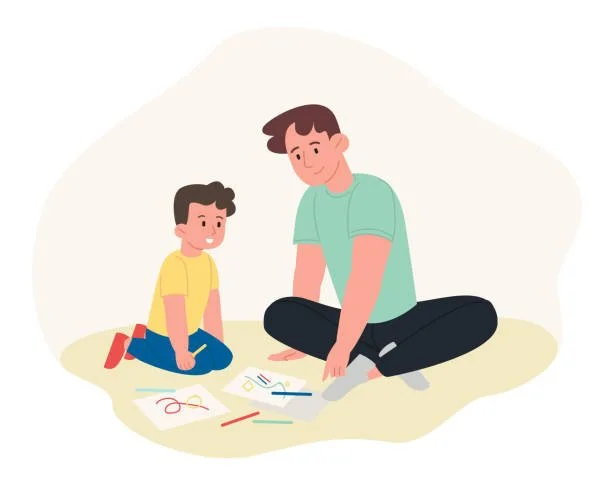
Play is a child’s natural language. Much like how adults talk to make sense of their world, children use toys and play to navigate and make sense of theirs. Play Therapy harnesses children’s natural ability to play as a form of expression to help families navigate concerns with their child and their family units.
There are many different theories of Play Therapy. Some theories differ from others greatly, while others are similar, with only a few differences in philosophy and approach. Many forms of Play Therapy are effective for a variety of concerns, while research supports that some theories are better at treating specific concerns than others.
What Is Child Centered Play Therapy?
Child-Centered Play Therapy is a theory of Play Therapy originally developed by Virginia Axeline.
The core beliefs of Child-Centered Play Therapy are:
The therapist accepts the child exactly as they are.
The therapist establishes a feeling of permissiveness in the relationship so that the child feels free to express their feelings completely.
The therapist is alert to recognizing the feelings the child is expressing and reflects those feelings back to them in such a manner that they gain insight into their behavior.
The therapist maintains a deep respect for the child’s ability to solve their own problems if given an opportunity to do so.
The therapist does not attempt to direct the child’s actions or conversation in any manner. The child leads the way, and the therapist follows.
The therapist does not attempt to hurry the therapy along. It is a gradual process and is recognized as such by the therapist.
The therapist establishes only those limitations that are necessary to anchor the therapy to the world of reality and make the child aware of his responsibility in the relationship. care is dear to my heart.
Structure and Strategies
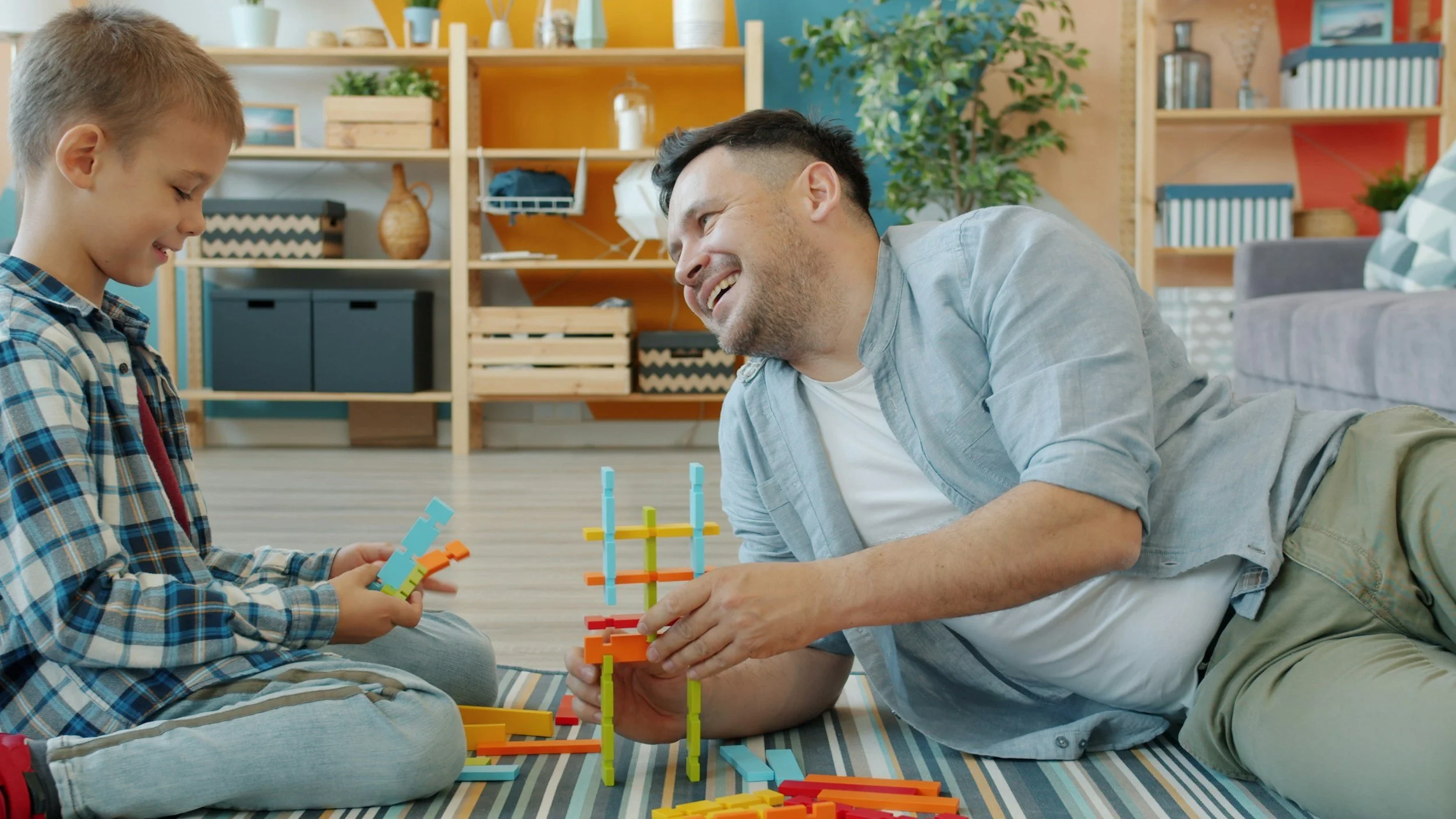
Child Centered Play Therapy is a “similar session model”, meaning that the therapist uses a consistent set of skills and techniques during every session. This model is used to stay true to the main tenets of trusting the child to solve their own problems, letting the child lead, and not rushing therapy.
There are four skills that are used in every session of Child-Centered Play Therapy:
Structuring is used to clearly set the tone for each session. It allows for consistency and predictability during the session. The two main parts of structuring are:
Entering the playroom in the same way each session such as inviting the child in and saying, “Welcome to the playroom. You can play with anything in the room, and I will be here with you” or some similar related phrase.
Leaving the playroom the same way each session such as giving the child a 5-minute and 1-minute warning that the session will end.
Empathetic Listening is used to communicate with the child during the session. This form of communication is also known as “reflective listening’ or “active listening”. The two main parts of empathetic listening are:
Reflecting Feelings such as recognizing feelings that a child may be feeling during play.
For example, responding to a child who is laughing with the statement: “You’re laughing so loud. You must be very happy!”
Tracking Behaviors such as recognizing the behaviors that a child is doing during the play.
For example, responding to a child who is putting a toy into a sand tray with the statement: “You picked that up and put it in the sand.”
Child Centered Imaginary Play is used when a child begins to play an imaginary scene and gives the therapist a role. The Therapist will play the role, always following the lead of the child, however, they will sometimes ask questions about their role or the imaginary play as a way to help learn more about the perspective of the Child.
Limit Setting is used to create a sense of safety in the playroom. In Child-Centered Play Therapy, limits are set minimally, but they serve as an important part of the process. A few examples of possible limits may include:
A child cannot hit the therapist.
A child cannot break toys in the playroom.
A child cannot throw sand on the ground.
A child cannot sit in the therapist’s lap.
There are many different limit setting philosophies that can be used. The most common limit setting philosophy used in Child Centered Play Therapy is:
The therapist states the limit.
“In here, you cannot hit me.”
If the same behavior occurs in the session the therapist gives a warning.
“Remember, you cannot hit me. If you hit me again, you will have to take a break from playing to calm down.”
If the behavior occurs a third time, the therapist enforces the consequence.
The therapist takes the child to the lobby, leaving them with their parents for a few minutes. When the therapist feels the child has calmed down, they return to the lobby and bring the child back to the playroom.

Child-Centered Play Therapy Session Example
The following is a fictional example of what may happen in a typical Child Centered Play Therapy Session.
Byron is a 5-year-old boy who is meeting with a therapist for his second Play Therapy Session. During the intake session with Byron’s mother, the therapist gathered that Byron is struggling with regulating impulsive behavior at home. His mother reports that he will get “hyper”, sometimes getting so dysregulated that he will knock over furniture and break things in the house. She shared that asking him to stop only escalates the behavior. During the first session, Byron had a seemingly calm demeanor and did not participate in any of the behaviors that his mother reported.
During the second session the therapist met Byron with a smile in the lobby before bringing him back to the playroom. On the way, Byron skipped excitedly. The therapist skipped with him, stating “We are skipping! You’re excited to play today (Tracking Behaviors/Reflecting Feelings)!”
Byron entered the playroom and immediately grabbed the foam swords. The therapist stated, “Welcome to the playroom. You can play with anything in here and I’ll be here with you (Structuring).” Byron laughed and stated, “You said that last time!” The therapist responded, “You think it’s funny when I do the same thing as last time. (Reflecting Feelings)”
Byron says that he would like to pretend that the therapist is a bad guy and he and the therapist are fighting. The therapist roars “I’m a bad guy!” and charges at Byron. The two begin sword fighting, occasionally hitting each other on the legs and arms (Child Centered Imaginary Play).
The first time that Byron hits the therapist in the leg, he looks concerned. The therapist responds, “You look worried (Reflecting Feelings).” Byron smiles and hits the therapist in the leg again. In a kind voice the therapist says, “You hit my leg again (Tracking Behaviors).”
Byron looks at the therapist and then swings at his head, hitting him. In a calm tone the therapist says, “Byron, in here we cannot hit each other in the head (Setting Limits).” Byron smiles at the therapist and swings the sword again. This time the therapist blocks the sword. “Byron, if you swing at my head again, I will take you to the lobby and you will take a break from playing (Setting Limits).
Byron doesn’t want to stop playing so he begins to swing the sword at the therapist’s legs again. The therapist begins to engage in Child Centered Imaginary Play and returns to acting as the “bad guy”.
This continues for 5 more minutes, until Byron swings at the therapist’s head again. The therapist responds by taking the sword from Byron and taking his hand. In a calm tone he states, “Byron, you hit me in the head again. Let's take a break (Setting Limits).”
Byron comes to the lobby and is visibly upset. The therapist states, “You're mad because we had to stop playing (Reflecting Feelings).”
Byron’s mom is concerned but she sits quietly while Byron faces away from her and the therapist. The therapist gives space for Byron to be angry, occasionally making observations about Byron turning away or furrowing his brow (Tracking Behaviors).
After a few minutes, Byron turns back towards his mom and the therapist, looking noticeably calmer. The Therapist says, “You look calmer now (Reflecting Feelings)”, and motions to the playroom. Byron gets up and skips back into the playroom. The Therapist says, "You're glad that we get to play again (Reflecting Feelings).”
The rest of the session goes without any need for limit setting. Byron and the therapist continue to play with swords and he does not swing at the therapist’s head again. At the end of the session, the therapist gives Byron a warning that he has five minutes to play, and another warning that he has one minute to play (Structuring)."
Once the time is up the therapist tells Byron that it is time to leave. They both get up and skip back into the lobby. The therapist tells Byron that he will see him next session and Byron and his mother leave the lobby.

Parent Involvement
Child-Centered Play Therapy emphasizes regular meeting with caregivers. This can be:
In an individual session with the caregivers (Without the child)
In 10-minute check-ins with the caregivers before or after the sessions.
The primary goals during caregiver meetings are typically:
Helping caregivers understand the Child Centered Play Therapy process.
Helping Caregivers use more effective caregiving skills, such as:
Setting Limits
Giving Consequences
Structuring/Organization
Reflective Listening

Strengths and Limitations
Child Centered Play Therapy is highly effective with young children, as it does not require any ability to “talk about” the concerns to address a child’s psychological or social needs. This also makes it very helpful when working with clients who may have limited verbal capacity (of all ages) for the same reason.
It can be highly effective for a large variety of needs as the Empathetic Listening skill highlights the emotions that are underlying the child’s concerns. Structuring and Limit Setting allow for predictability that create safety for both the therapist and the child.
Child-Centered Play Therapy may lose its effectiveness as some children develop. The term develop is important as not all children of the same age act on the same developmental level. As children become more insightful about their behaviors, they may begin to need more time to process the feelings or have questions that a Child-Centered Play Therapy approach may not be able to address. That is not to say that Child Centered Play Therapy cannot be helpful as a child ages, but the child may begin to want more from the therapy process as they become more aware of their concerns.
It may also be limited when extreme safety concerns are involved, such as when a child's anger may result in physical harm to themselves and/or others. Child-Centered Therapy may be effective in these cases, but only when integrated with a more direct limit setting structure.
The most common misconception about Child-Centered Play Therapy are:
The therapist is just playing with the Child.
Client-Centered Play Therapy may address feelings, but it can't help with behavior.
As seen in the case example of Byron, “just playing” occurs at times to promote a fun and engaging experience for the child, however the use of Empathetic Listening and Child-Centered Imaginary Play create a structured way of interacting with children that promotes healthy psychological and social growth.
Child-Centered Play Therapy focuses on trusting the child to solve their concerns, thus emphasis on managing behaviors relies on the therapist’s ability to create a safe environment using Structuring and Limit Setting. Research has proven that this approach is sufficient in decreasing maladaptive behaviors.

In summary, Child-Centered Play Therapy is rooted in the belief that when children are given a safe environment, they are capable of solving their own mental health concerns. The Child-Centered Play Therapy uses a very specific set of tools such as structuring, empathetic listening, child-centered imaginary play, and limit setting to create and maintain said safe environment. The Child-Centered Play Therapist involves parents in the process of therapy whenever possible. Due to this, it can be utilized to manage a variety of different therapeutic concerns which make it especially effective when treating young children.
If you have any questions about the contents of this blog you may contact Nick Fasanello at nickfasanellotherapy@gmail.com.
The contents of this blog were created using the resource Child Centered Play Therapy by Rise VanFleet, Andrea E. Sywulak, and Cynthia Caparosa Sniscick.